

Red Azolla, Ferny Azolla, Scientific name: Azolla Pinnata
Red Azolla is the name of the growth which effects the man made lakes at Bellvista.
The information below has been taken from a public pdf document created for the Gold Coast Council. You can download the original Gold Coast Council document (776 kb .pdf file) HERE.
What is Azolla?
Common names: Red Azolla, Ferny Azolla, Scientific name: Azolla Pinnata
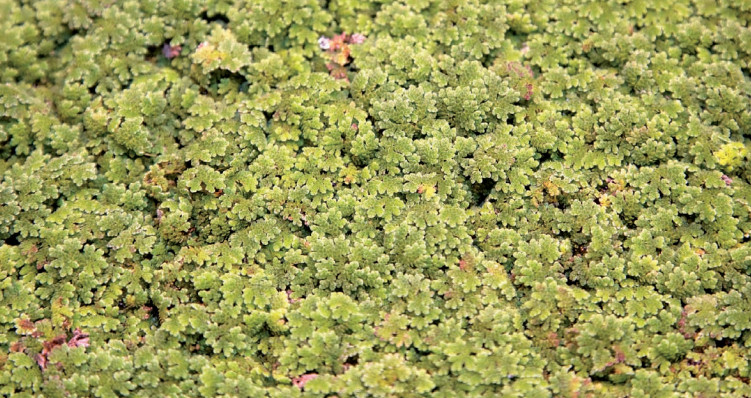
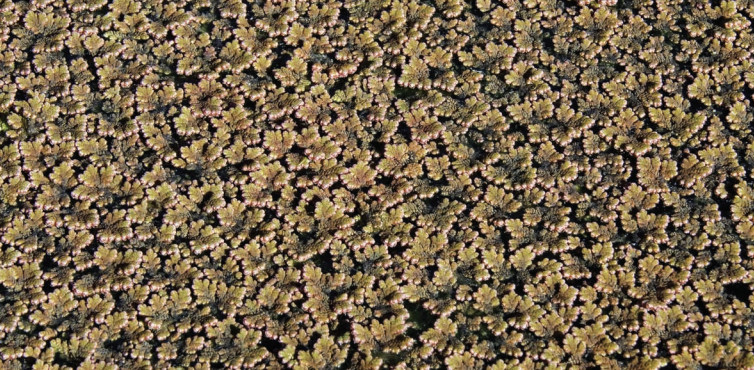
Red Azolla is a small, native, floating fern – one of only six, free-floating, aquatic fern species. It grows from 1 cm to 2.5 cm wide and is a bright green colour. Its colour changes to deep red when it is exposed to the sun, thus the name Red Azolla. Azolla grows in waterways in dense patches, which can look like a green or red carpet. From a distance it may be confused with Salvinia, a noxious aquatic weed, or the scum of a blue-green algal bloom.
Benefits of Azolla
Azolla is beneficial to the aquatic environment in many ways.
(a) It is a food source for waterfowl, fish, shrimp, insects, worms, snails and crustaceans.
(b) It provides habitat for many of the small organisms mentioned above.
(c) Mats of Azolla can actually discourage blue-green algal blooms. They restrict the penetration of sunlight into the water, which is essential for algal growth, and take up nutrients from the water column, limiting the availability of this food source for the algae.
(d) The mats of Azolla can be a form of biological mosquito control, preventing mosquito larvae surfacing for air.
(e) The presence of Azolla can also restrict the growth of exotic aquatic plants, including Salvinia and Water Hyacinth, as it limits the availability of nutrients to these plants.
Can Azolla have detrimental effects on a waterway?
The presence of Azolla in a waterway is generally beneficial. However, in circumstances where waterways are extremely rich in nutrients, prolific growth may be a problem. It also is possible that thick, complete coverings of Azolla can cause de-oxygenation of the water. This can affect organisms such as fish and other aquatic plants, and the decay of the latter can lead to a strong odour. However, situations like this are rare because coverage of the waterway by the Azolla needs to be almost total for it to have a negative impact on the ecosystem.
Pictured below: new Azolla growth:
How do Councils manage Azolla?
Because Azolla is a native species with numerous benefits for aquatic ecosystems, Council does not automatically remove it in response to aesthetic concerns. Council waterways are typical of aquatic systems in sub-tropical environments, which means that aquatic plant growth is a normal occurrence, subject to seasonal fluctuations. In warmer months when sunlight is plentiful, Azolla is likely to be more prolific. The removal of Azolla can actually have negative impacts on a waterway. If the Azolla is no longer there to take up nutrients from the water column, they become available for blue-green algae, which can bloom in nutrient rich environments. Such blooms are potentially toxic.
How can the community reduce the impact of nutrients on waterways?
(a) Everyone has a responsibility to reduce water pollution. Following a few, simple guidelines will help to ensure local waterways remain healthy.
(b) Pick up animal droppings from lawns and parks and place them in a bin.
(c) Do not feed native wildlife. Providing human food for native animals can attract pest species to the system and increase faecal waste, which affects water quality. Animals can also become reliant on human feeding and lose their natural ability to forage.
(d) Disposing of garden waste in or near a water body can allow weeds to enter a system and add excessive nutrient. Always place garden waste in a bin or take it to the tip.
(e) Never wash cars or household equipment in the driveway or the street. This will help to prevent detergents entering the stormwater system.
(f) Use fertilisers in moderation and strictly according to directions on the product.
(g) When undertaking building or home renovations, keep building materials covered and install silt fencing along property boundaries where appropriate.
(h) Report pollution to Council’s Health Services.
Pictured below: Azolla after it has been exposed to sunlight.


Business Community
These Local Businesses support your local Community Association so we urge you to support them in return. View Local Businesses below.
Local Businesses

Membership
Membership of BeCA is free to all Bells Reach and Bellvista residents, business owners, landowners or any person who has ongoing employment in Bells Reach or Bellvista.
Online Application

Photo Gallery
Take a quick tour around Bellvista and Bells Reach Estates with large park areas, kids playgrounds, two lakes, BBQ facilities, open pathways and beautiful garden areas.
View Gallery

Beach & Surf Cams
Bellvista and Bells Reach are just a few minutes drive from sensational beaches. Use this link to check current beach conditions and view live surf cams around the Sunshine Coast.
View Surf Cams